
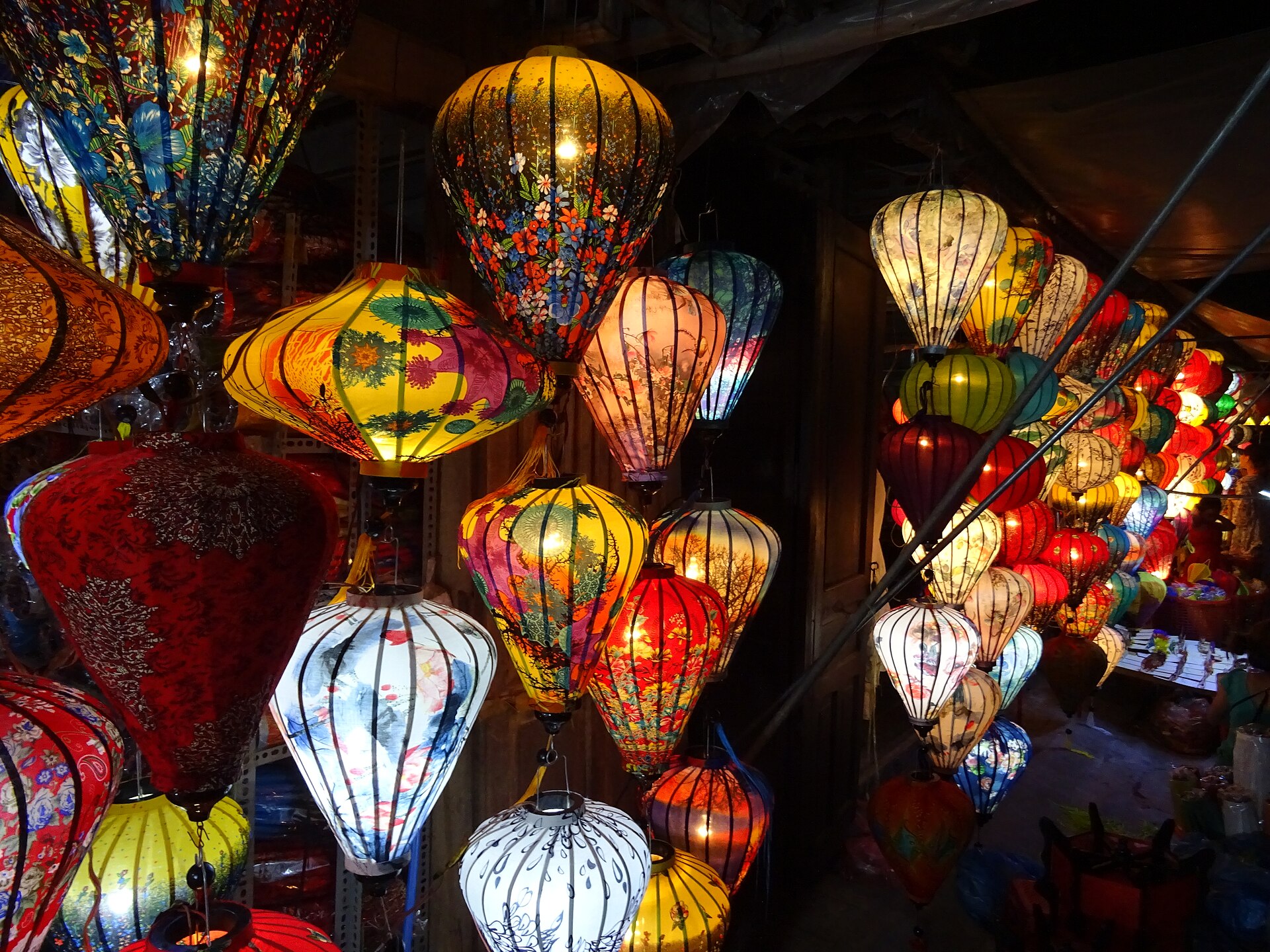
Few places in Vietnam cast a spell quite like Hoi An Ancient Town. This lantern-lit trading port on the central coast was one of Southeast Asia’s busiest harbours between the 15th and 19th centuries, and its remarkably preserved streets earned UNESCO World Heritage status in 1999. Today the honey-coloured merchant houses, Chinese assembly halls and Japanese-influenced bridges make Hoi An ancient town one of the most romantic and walkable destinations in the country — a place to slow down, eat brilliantly and watch paper lanterns glow on the Thu Bon River.
Top highlights
The Ancient Town itself is the star attraction, a compact grid of car-free lanes best explored on foot. A single sightseeing ticket grants entry to a selection of the town’s historic monuments and heritage houses.
- Japanese Covered Bridge — the town’s emblem, a small covered footbridge built by the Japanese community around the early 17th century, complete with a tiny temple inside. It even features on Vietnam’s 20,000 dong banknote.
- Ancient wooden merchant houses — Tan Ky House and Phung Hung House are centuries-old family homes showing a blend of Vietnamese, Chinese and Japanese carpentry, still lived in by descendants of the original traders.
- Assembly halls — the Fujian (Phuc Kien) and Cantonese assembly halls were built by Chinese merchant communities and are richly decorated with dragons, incense coils and colourful altars.
- The lantern-hung streets and Thu Bon riverfront — the heart of the old town, magical after dark when hundreds of silk lanterns light up.
Things to do
Hoi An rewards travellers who linger. Beyond sightseeing, the town is famous for its craftsmanship and food.
- Tailors and shopping — Hoi An has a long reputation as a tailoring hub, with dozens of shops that can measure and make custom clothing and leather shoes, often within a day or two. Choose an established tailor and allow time for fittings.
- Hoi An cooking classes — many restaurants and homestays run half-day classes that begin at the local market and teach regional dishes such as white rose dumplings, cao lau noodles and fresh spring rolls.
- Cam Thanh basket-boat trips — in the nearby water-coconut groves, local boatmen paddle round bamboo basket boats through the waterways, often with spirited boat-spinning shows.
- Tra Que herb village — a short ride from town, this organic herb-growing village lets visitors try their hand at traditional farming and enjoy garden-fresh meals.
- Release a lantern — floating a lit paper lantern on the river is a cherished local ritual, especially during the monthly full-moon lantern festival.
The lantern festival
Once a month, on the night of the full moon, Hoi An switches off much of its electric lighting for the Lantern Festival. The old town glows with silk and paper lanterns, the streets fill with music and traditional games, and the river shimmers with floating candles. It is one of the most atmospheric experiences in central Vietnam, so try to time your visit to coincide with it.
Beaches near Hoi An
Hoi An sits just a few kilometres from the coast, making it easy to pair culture with sand and sea.
- An Bang Beach — the most popular strand, lined with relaxed beach bars and seafood shacks.
- Cua Dai Beach — closer to the river mouth and historically the town’s main beach, though parts have been affected by erosion.
Best time to visit
The most comfortable months are roughly February to May, when the weather is warm and relatively dry before the peak summer heat. The central coast’s rainy season falls in the autumn months, and heavy rain can occasionally cause flooding along the low-lying riverfront. Summer is hot and popular with domestic tourists. Whatever the season, aim to explore the old town in the early morning or evening to avoid the midday heat and crowds.
How to get there
Hoi An does not have its own airport or train station. The usual gateway is Da Nang, home to an international airport and a railway station on the main north–south line. From Da Nang it is a short drive of roughly 30 to 45 minutes south to Hoi An by taxi, private transfer or ride-hailing car. Many visitors combine Hoi An with Da Nang and the imperial city of Hue, which lies a few hours further north over the scenic Hai Van Pass.
Insider tips
- Explore on foot or by bicycle — the Ancient Town is pedestrianised at busy times and cycling out to the beach or Tra Que is a delight.
- Order tailored clothing early in your stay so there is time for one or two fittings before you leave.
- Visit temples and heritage houses just after opening to enjoy them before the tour groups arrive.
- Try the local specialities — cao lau (only made properly in Hoi An), white rose dumplings and banh mi from the town’s celebrated bakeries.
- Dress respectfully when entering assembly halls and temples, covering shoulders and knees.
Whether you come for the tailoring, the food, the lantern-lit nights or simply to wander streets that have barely changed in centuries, Hoi An ancient town delivers a gentler, more soulful side of Vietnam. Give it at least two or three nights and let its unhurried rhythm work on you.
Official information
For official visitor information about Hoi An, see the official Hoi An tourism page.
Our Hoi An tours
Explore Hoi An with Top Asian Travel — private guide, hotel pickup and flexible itineraries.
- Hoi An Lantern Making – Painting Experience — from $11
- Hoi An Lantern making experience — from $11
- Hoi An Traditional Occupational Village half day trip — from $15
- My Son holy land (Half day) — from $20
- Cycling to Tra Que Vegetable Village — from $30
- Full Day City & My Son Tour — from $37
- Cham Island Explorer Full Day — from $40
- Da Nang Beach Break (4 days / 3 nights) — from $76
- Bach Ma National Park Trekking 2 days — from $108
- Hue Da Nang Hoi An Beach 4 days — from $121
Ready to plan your trip? Contact Top Asian Travel for a tailor-made Hoi An itinerary and a free quote.


