
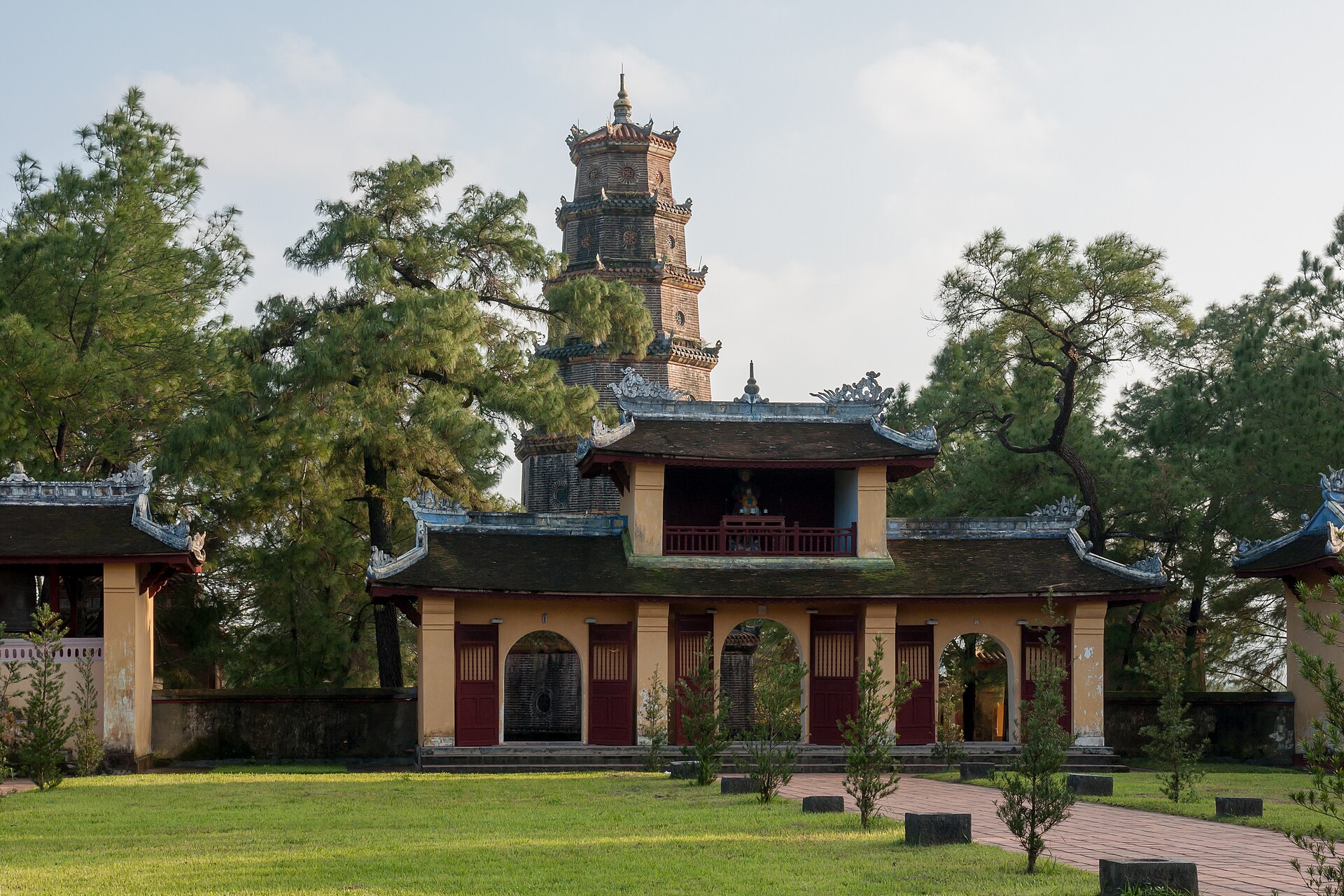
Serene, scholarly and steeped in history, Hue was the imperial capital of Vietnam under the Nguyen Dynasty from 1802 to 1945. Straddling the gentle Perfume River in central Vietnam, this UNESCO World Heritage city is a living museum of citadels, royal tombs, pagodas and refined court cuisine. A Hue imperial city tour is a journey into the heart of Vietnamese royal heritage — a slower, more contemplative counterpoint to the country’s busy modern hubs.
Top highlights
- The Imperial Citadel — A vast walled complex ringed by a moat, containing palaces, temples, gates and courtyards built to mirror Beijing’s Forbidden City. Enter through the majestic Ngo Mon Gate and explore the Thai Hoa Palace, where emperors once held court.
- The Forbidden Purple City — The innermost enclosure within the Citadel, once reserved exclusively for the emperor and his household. Much was destroyed in twentieth-century conflict, but ongoing restoration and the surviving foundations still convey its former grandeur.
- Thien Mu Pagoda — An elegant seven-storey pagoda on a hill above the Perfume River, and an enduring symbol of Hue. Founded in the seventeenth century, it remains an active monastery.
- The royal tombs — Scattered in the countryside south of the city, the elaborate mausoleums of the Nguyen emperors are among Hue’s greatest treasures (see below).
- Dong Ba Market — Hue’s largest and most atmospheric market on the riverbank, the place to sample local specialities and browse conical hats, silk and spices.
The royal tombs
Each Nguyen emperor designed a tomb that reflected his character, and visiting two or three makes for a rewarding day. The Tomb of Minh Mang is celebrated for its symmetry and serene lakes and gardens, a model of classical harmony. The Tomb of Tu Duc is the most poetic, a sprawling retreat of pavilions, pine forest and lotus ponds where the scholarly emperor once wrote poetry. The Tomb of Khai Dinh is utterly different — a hillside monument fusing Vietnamese and European styles, its dim interior a dazzling riot of glass and porcelain mosaic.
Things to do
Beyond the monuments, Hue rewards slow exploration. Take a dragon-boat cruise along the Perfume River, drifting past pagodas and villages toward Thien Mu. Cycle the quiet lanes around the Citadel, or cross the striking Trang Tien Bridge at dusk when it glows with colour. History enthusiasts can make a sobering day trip to the nearby DMZ and Vinh Moc tunnels, while the Thanh Toan covered bridge and surrounding countryside offer a gentle rural escape.
Royal cuisine and local food
Hue takes its food seriously, a legacy of the elaborate multi-dish banquets once prepared for the emperor. The city is the birthplace of bun bo Hue, a bold, lemongrass-scented beef-and-noodle soup with a spicy, aromatic broth that many consider Vietnam’s finest noodle dish. Look out too for banh khoai (crispy stuffed pancakes) and delicate steamed rice cakes such as banh beo, banh nam and banh loc, often served as a colourful spread of small plates. Sampling royal-style cuisine, sometimes served in traditional dress, is a memorable evening out.
Best time to visit
The most comfortable months are February to April, when the weather is generally dry and mild before the intense summer heat. Central Vietnam’s rainy season runs roughly from September to December, and Hue is prone to heavy downpours and occasional flooding late in the year, so pack accordingly. If your visit coincides with the biennial Hue Festival, expect the city to come alive with parades, performances and reenactments of royal ceremonies.
How to get there
Hue is well connected. Phu Bai Airport, a short drive from the centre, links the city to Hanoi and Ho Chi Minh City. The train journey between Hue and Da Nang is one of Vietnam’s most scenic, curving over the coastal Hai Van Pass with sea views on one side and mountains on the other. Da Nang and Hoi An lie only a few hours south by car, making Hue a natural stop on a central-Vietnam itinerary.
Insider tips
- Start early at the Citadel to beat the heat and the tour groups; allow at least half a day to explore properly.
- Hire a car or join a tour to visit the more distant royal tombs efficiently, as they are spread across the countryside.
- Consider the Hue–Da Nang train for the Hai Van Pass views rather than driving through the tunnel.
- Bring rain protection if visiting in autumn, and check conditions during the flood season.
- Don’t leave without a bowl of authentic bun bo Hue from a busy local spot — it tastes best where the locals eat.
With its imperial monuments, riverside pagodas, poetic tombs and celebrated cuisine, Hue offers a uniquely refined and reflective travel experience. It is the ideal place to slow down, absorb Vietnam’s royal past, and savour the elegance of its former capital.
Official information
For official visitor information about Hue, see the official Hue tourism page.
Our Hue tours
Explore Hue with Top Asian Travel — private guide, hotel pickup and flexible itineraries.
- Hue Imperial City Half Tour by Cyclo — from $26
- Half Day Boat Tour & Vietnamese traditional folk song — from $40
- Hue Discovery With Boat Trip On Perfume River — from $45
- Demilitarized Zone (DMZ) – 1 day tour from HUE — from $48
- Hue city full day tour — from $53
- Ke Bang National Park – Phong Nha Cave 1 day tour — from $55
- Phong Nha Ke Bang: World Natural Heritage — from $73
- Bach Ma National Park Trekking 2 days — from $108
- Hue Da Nang Hoi An Beach 4 days — from $121
- 5-Day Central Vietnam cultural discovery tours — from $455
Ready to plan your trip? Contact Top Asian Travel for a tailor-made Hue itinerary and a free quote.


