
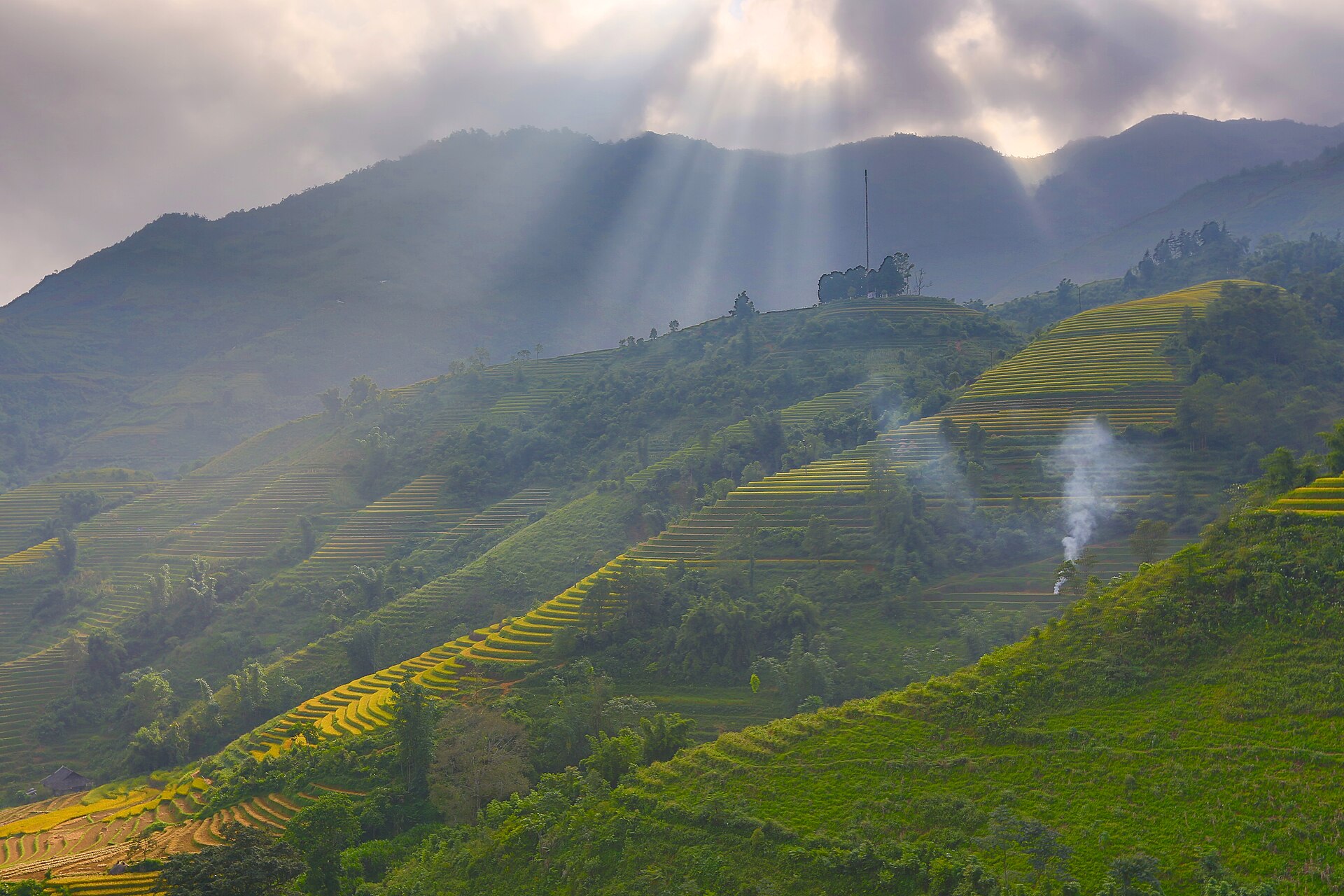
Tucked high in the Hoang Lien Son mountains of Lao Cai province, Sapa is northern Vietnam’s most beloved highland escape. Cool, misty and endlessly photogenic, it is famous for its emerald rice terraces cascading down steep valleys and for the vibrant hill-tribe communities — Hmong, Dao, Tay and Giay — who have farmed these slopes for generations. Whether you come for challenging Sapa trekking, colourful markets or simply the mountain air, this is a place that stays with you.
Top highlights
- Muong Hoa Valley — The heart of Sapa’s scenery, a broad valley lined with sculpted rice terraces that turn brilliant green in summer and glowing gold before the autumn harvest. Ancient carved stones dot the valley floor.
- Fansipan — At 3,143 metres, the highest peak in Vietnam and Indochina, nicknamed “the Roof of Indochina.” You can trek to the summit over two to three days or ride a cable car most of the way for far-reaching views above the clouds.
- Cat Cat Village — The closest village to Sapa town, home to the Black Hmong and set beside a waterfall. Easily walkable, it offers weaving demonstrations and handicrafts, though it is the most touristy of the villages.
- Lao Chai and Ta Van villages — Deeper in the Muong Hoa Valley, these Hmong and Giay villages are the classic trekking destination, surrounded by terraces and offering authentic homestays.
- Bac Ha Market — Held each Sunday about two to three hours from Sapa, this is one of the region’s most colourful ethnic markets, where the Flower Hmong gather in dazzling embroidered dress to trade everything from textiles to livestock.
Things to do
Trekking is the signature Sapa experience. Routes range from gentle half-day walks to Cat Cat, to full-day hikes through Lao Chai and Ta Van, to multi-day treks linking remote villages and staying overnight with local families. Hiring a local Hmong or Dao guide not only keeps you on the right trails but directly supports the community, and the conversations along the way are often a highlight in themselves.
A homestay is the best way to understand mountain life — sharing a family meal, sampling rice wine and waking to mist rising off the terraces. Beyond trekking, visitors ride the Fansipan cable car, explore Sapa’s weekend markets, visit the thundering Silver Waterfall (Thac Bac) and the Tram Ton Pass, and browse the town’s night market for handmade textiles and indigo-dyed clothing. Terraced fields, buffalo, and children in embroidered dress make every walk feel cinematic.
Best time to visit
Sapa is a year-round destination with very different moods. September and October are arguably the finest months, when the rice terraces turn gold at harvest and skies are often clear. The green season of May to August is lush and vivid, with the terraces freshly planted and full of water, though afternoon rain is common. Spring (March to April) brings blossoms and mild weather. Winter (December to February) is cold, and on rare occasions frost or even a dusting of snow reaches the highest peaks — beautiful, but pack warm clothing, as temperatures can drop sharply and fog may obscure the views.
How to get there
Sapa lies roughly 315 kilometres northwest of Hanoi. The most popular route is a direct sleeper bus or limousine van along the expressway to Lao Cai, taking around five to six hours to Sapa town. Alternatively, an overnight train runs from Hanoi to Lao Cai city, from where it is about an hour’s drive up the winding mountain road to Sapa — a romantic option that saves a daytime transfer. Many travellers combine a Sapa trekking tour with a few days in Hanoi.
Insider tips
- Wear proper footwear with grip — trails can be steep, muddy and slippery, especially after rain.
- Book a homestay for at least one night to experience village life beyond the day-tour crowds.
- Hire a local ethnic-minority guide; it improves the trek and puts income directly into the community.
- Bring layers and a light rain jacket in every season; mountain weather changes fast and mornings are cool.
- Carry small cash for markets and homestays, and buy textiles directly from the women who make them.
From the golden terraces of Muong Hoa to the summit of Fansipan and the riot of colour at Bac Ha Market, Sapa offers a side of Vietnam that feels a world away from the coast and the cities. Take your time, walk slowly, and let the mountains and their people show you the way.
Official information
For official visitor information about Sapa, see the official Sapa tourism page.
Our Sapa tours
Explore Sapa with Top Asian Travel — private guide, hotel pickup and flexible itineraries.
- Sapa – Ta Van – Ban Ho 5 days — from $312
- Can Cau market and Bac Ha market tour 4 days
- Sapa trekking home stay & Topas Eco Lodge 4 days
- Bac Ha & Coc Ly special market & boat trip 4 days
- Sapa – Cat Cat – Sin Chai – Giang Ta Chai 3 nights
- Sapa – Lao Chai – Ta Van Giang Ta Chai – Coc Ly Market – 3 days
- Cao Son market day – 3 nights (on Wednesday)
- The North West Loops 7 Days
- Northern Vietnam trekking 8 days – Sapa Ha Giang Loop
- Northern Vietnam with Sapa Discovery Tour – 6 days
Ready to plan your trip? Contact Top Asian Travel for a tailor-made Sapa itinerary and a free quote.


